School teaches us mathematics, science, languages, and many other subjects. But how often do students learn how to manage money, make decisions, communicate confidently, or handle failure?
As teenagers prepare for higher education, careers, and adult responsibilities, academic knowledge alone is not enough. They also need practical life skills that help them become independent, responsible, and confident individuals.
The good news? These skills do not require special talent. They can be developed through everyday experiences, practice, and the willingness to learn.
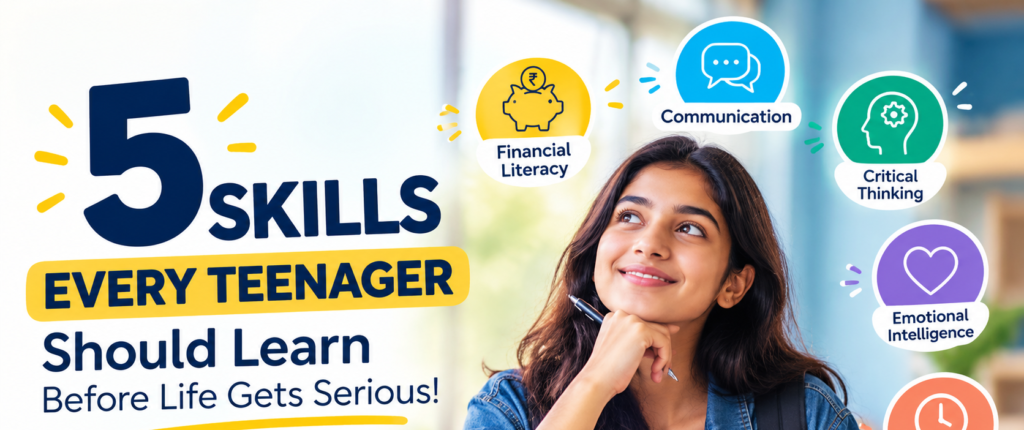
Here are five essential life skills every teenager should develop before stepping into the real world.
1. Financial Literacy: Learn to Manage Money
Understanding money is one of the most important skills teenagers can develop early in life.
Many students learn how to earn marks but not how to manage money. Knowing how to budget, save, and spend wisely can help them make better financial decisions in the future.
What should teenagers learn?
- Create a simple monthly budget.
- Understand the difference between needs and wants.
- Develop a habit of saving money.
- Learn about bank accounts, digital payments, and online financial safety.
- Recognise misleading offers and impulsive spending habits.
Try this: If you receive pocket money, divide it into spending, saving, and planned expenses. This simple habit can teach you responsibility and financial discipline.
2. Communication Skills: Learn to Express Yourself
Good communication is not just about speaking fluent English or using impressive words. It is about expressing your thoughts clearly, listening carefully, and understanding others.
Whether you attend a college interview, participate in a group discussion, work on a team project, or resolve a disagreement, communication skills can make a real difference.
What should teenagers learn?
- Express opinions respectfully.
- Listen without interrupting.
- Ask questions when something is unclear.
- Speak confidently in front of others.
- Write clear emails and professional messages.
Try this: Participate in classroom discussions, practise short presentations, and learn to explain your ideas in your own words. Remember, confidence grows with practice.
3. Critical Thinking and Decision-Making: Learn to Think Independently
Teenagers face countless decisions, from choosing subjects and courses to managing friendships and using social media.
It is easy to follow friends, believe everything seen online, or make decisions based on temporary emotions. Critical thinking helps students examine information, consider alternatives, and make informed choices.
What should teenagers learn?
- Question information before believing or sharing it.
- Identify reliable sources.
- Compare the advantages and disadvantages of different options.
- Think about the possible consequences of decisions.
- Recognise peer pressure and make independent choices.
Try this: Before making an important decision, ask yourself three questions: What are my options? What could happen next? Does this choice match my goals and values?
Learning to think independently helps teenagers become more confident decision-makers.
4. Emotional Intelligence: Learn to Understand Your Emotions
Life will not always go according to plan. Exam results may disappoint you, friendships may change, and mistakes may happen.
Emotional intelligence helps teenagers recognise their feelings, manage their reactions, understand other people’s perspectives, and respond to challenges constructively.
What should teenagers learn?
- Recognise and name their emotions.
- Handle frustration and disappointment constructively.
- Accept feedback without taking everything personally.
- Understand other people’s feelings and perspectives.
- Ask trusted adults for support when needed.
Try this: When you feel upset or overwhelmed, pause before reacting. Identify what you are feeling, think about what caused it, and consider a helpful next step.
Remember, emotional strength does not mean never feeling sad, angry, or nervous. It means learning how to respond to those feelings in healthy ways.
5. Time Management and Self-Discipline: Learn to Take Responsibility
Between school, homework, exams, hobbies, friendships, and screen time, teenagers often struggle to manage their schedules.
Time management is not about staying busy every minute. It is about understanding priorities, completing important tasks, and making time for rest and personal interests.
What should teenagers learn?
- Set realistic daily and weekly goals.
- Break large tasks into smaller steps.
- Prioritise important work.
- Reduce distractions while studying.
- Balance responsibilities with sleep, recreation, and social activities.
Try this: At the beginning of each day, identify your three most important tasks. Complete them one by one instead of trying to do everything at once.
Self-discipline develops gradually. Small, consistent actions often create better habits than occasional bursts of motivation.
Why Should Teenagers Learn These Skills Early?
The transition from school to college, higher education, and employment brings new responsibilities. Students may need to manage their own schedules, communicate with unfamiliar people, make financial decisions, and adapt to unexpected situations.
Developing life skills early can help teenagers:
- Become more independent and responsible.
- Build confidence in unfamiliar situations.
- Make informed academic and career decisions.
- Develop healthier relationships.
- Adapt to change and overcome everyday challenges.
These skills are valuable regardless of whether a student chooses science, commerce, arts, vocational education, entrepreneurship, or another career path.
Final Thoughts
You do not have to wait until you enter college or start earning to prepare for life. You can begin learning these skills today through small, practical steps.
Manage your pocket money, speak up when you have an idea, question what you read online, understand your emotions, and take responsibility for your daily tasks.
Success is not determined by academic marks alone. It also depends on how well you understand yourself, make decisions, interact with others, and handle life’s challenges.
At DrawMyCareer, we believe that preparing students for the future means helping them understand their interests, strengths, abilities, and career opportunities while developing the skills they need to make informed choices.
Because preparing for life is just as important as preparing for exams!
Start building your life skills today. Your future self will thank you.