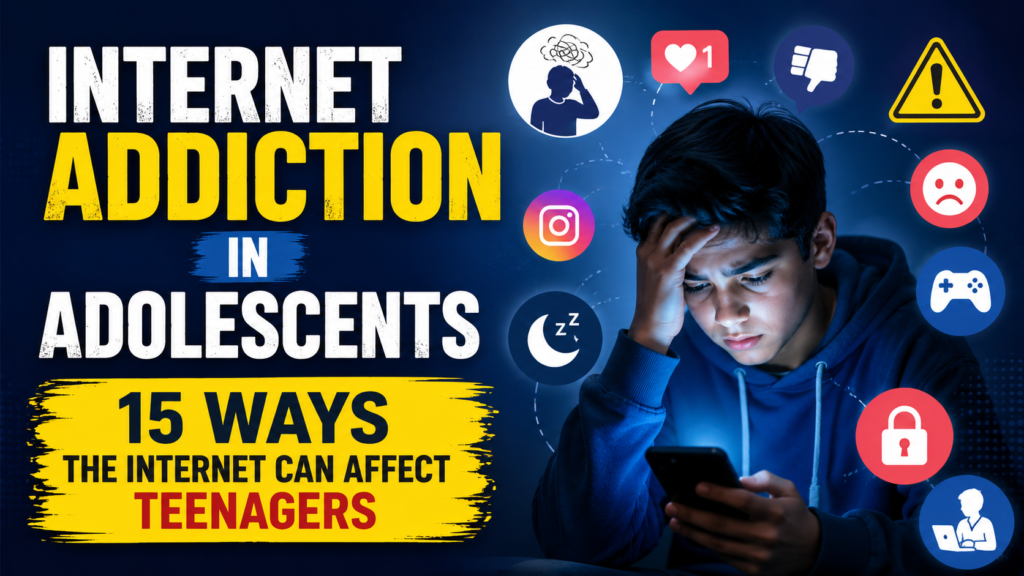
1. Mental & Emotional Health
- Anxiety and stress: Constant notifications, online pressure, and fear of missing out (FOMO) can increase stress.
- Low self-esteem: Comparing appearance, lifestyle, marks, or popularity with people online can make teenagers feel “not good enough.”
- Depressive feelings: Cyberbullying, social rejection, loneliness, and unrealistic online expectations may contribute to emotional distress.
- Mood changes: Excessive screen use can make some adolescents irritable, restless, or emotionally overwhelmed.
- FOMO: Seeing friends’ activities online can make them feel left out.
- Validation seeking: Depending on likes, comments, views, or followers for self-worth can become unhealthy.
2. Social Media Problems
- Cyberbullying: Insults, threats, rumours, embarrassing photos/videos, or exclusion through social media.
- Online peer pressure: Friends may pressure them to post, share, drink, vape, participate in risky challenges, etc.
- Fear of judgment: Teenagers may constantly worry about how others perceive them.
- Online conflicts: Small misunderstandings can quickly become public arguments.
- Social comparison: Influencers often show an edited or unrealistic version of life.
3. Internet & Gaming Addiction
- Excessive gaming or internet use may lead to:
- Losing track of time
- Neglecting studies and responsibilities
- Sleeping late
- Reduced physical activity
- Irritability when asked to stop
- Difficulty concentrating on other activities
- Withdrawal from family and offline friends
A key warning sign is when internet use starts interfering with normal daily life, rather than simply the number of hours spent online.
4. Sleep Problems
- Using phones late at night can:
- Delay bedtime
- Reduce sleep duration
- Make it harder to fall asleep
- Cause of tiredness during school
- Affect concentration and memory
- Increase daytime irritability
- Notifications and the habit of checking the phone can also disturb sleep.
5. Education & Academic Performance
- The internet can become a major distraction through:
- Reels/short videos
- Gaming
- Social media
- YouTube
- Online chatting
- Constant notifications
It can result in procrastination, reduced attention span, poor study habits and incomplete assignments.Another issue is easy access to answers, which can encourage copying instead of learning.
6. Physical Health
- Long periods online can contribute to:
- Eye strain
- Headaches
- Neck and shoulder pain
- Poor posture
- Reduced physical activity
- Weight-related problems
- Fatigue Sitting for long periods can replace sports, outdoor play and other healthy activities.
7. Exposure to Inappropriate Content
- Adolescents may accidentally or intentionally encounter:
- Pornography
- Violent content
- Hate or extremist content
- Drug-related content
- Dangerous challenges
- Self-harm-related content
- Unrealistic body/beauty standards
Because adolescents are still developing emotionally and socially, they may not always have the maturity to understand or critically evaluate what they see.
8. Online Grooming & Sexual Exploitation
- Strangers can pretend to be teenagers and build trust with adolescents.They may eventually:
- Ask for private photographs
- Ask personal questions
- Encourage secrecy
- Move conversations to private platforms
- Threaten or blackmail the teenager
- This is why adolescents should never be taught to share intimate images or personal information with online contacts.
9. Privacy & Digital Footprint
- Teenagers may share:
- Phone numbers
- Address/location
- School information
- Personal photographs
- Passwords
- Family information
They may not realize that screenshots and forwarded messages can remain online even after deleting them.
An important lesson: “If you wouldn’t want your teacher, parent, or future employer to see it, think twice before posting it.”
10. Online Scams & Financial Risks
- Adolescents may be targeted by:
- Fake competitions
- Gaming scams
- Fake job offers
- Phishing links
- Fake shopping websites
- Requests for OTPs or passwords
- In-app purchase traps
- They should understand: Never share OTP, PIN, password or banking details with anyone online.
11. Fake News & Misinformation
- Teenagers may believe information simply because:
- It has many likes
- An influencer said it
- It appears in a video
- Friends shared it
They need to learn to check the source, date and evidence before believing or forwarding information.
12. Body Image & Unrealistic Beauty Standards.
- Filters, editing and carefully selected photographs can create unrealistic expectations about:
- Skin
- Body shape
- Hair
- Clothes
- Fitness
- Lifestyle
This can lead to body dissatisfaction and unhealthy attempts to change appearance.
13. Relationships & Sexual Behavior
- The internet can influence adolescents’ understanding of:
- Love
- Dating
- Relationships
- Consent
- Sex
- Gender roles
Pornography and unrealistic relationship content can create wrong expectations about intimacy, consent and healthy relationships.
14.Family Relationships
- Excessive internet use can cause:
- Less family interaction
- Arguments about screen time
- Secretive phone use
- Parents feeling disconnected from the teenager
- Teenagers feeling that parents don’t understand them
Sometimes the problem isn’t simply “too much screen time”, but that the internet has replaced important family interaction.
15. Communication Skills
- If most communication happens through texting or social media, adolescents may get fewer opportunities to practice:
- Face-to-face conversation
- Reading body language
- Handling disagreements
- Listening
- Empathy
- Real-world social interaction
⚠️ A simple message for adolescents
“The internet is a tool—not your whole life.”
Teach them the 5 S’s:
STOP – Before clicking, posting or replying.
SCREEN – Check whether the content is trustworthy and appropriate.
SHARE CAREFULLY – Never share private information or intimate photos.
SPEAK UP – Tell a trusted adult if something feels wrong.
STEP AWAY – Take regular breaks and maintain sleep, exercise, studies and real-life relationships.The most important message is not “ the Internet is bad.” Adolescents need to learn healthy, safe and responsible internet use, because the internet is also an excellent tool for learning, creativity, communication and career development.
-Philomena Dsouza
About us
“Unlock your dream career with Draw My Career! Our AI-powered platform, personalized report, combined with expert counseling and lifelong support, helps you discover your passion, stay focused on your goals, and achieve success. We proudly claim to have positively impacted over 3,000 students in and around Mangalore, receiving overwhelmingly positive feedback. For expert career guidance,Take the first step towards a brighter future and let us guide you to write your own success story.”
Visit: www.drawmycareer.com