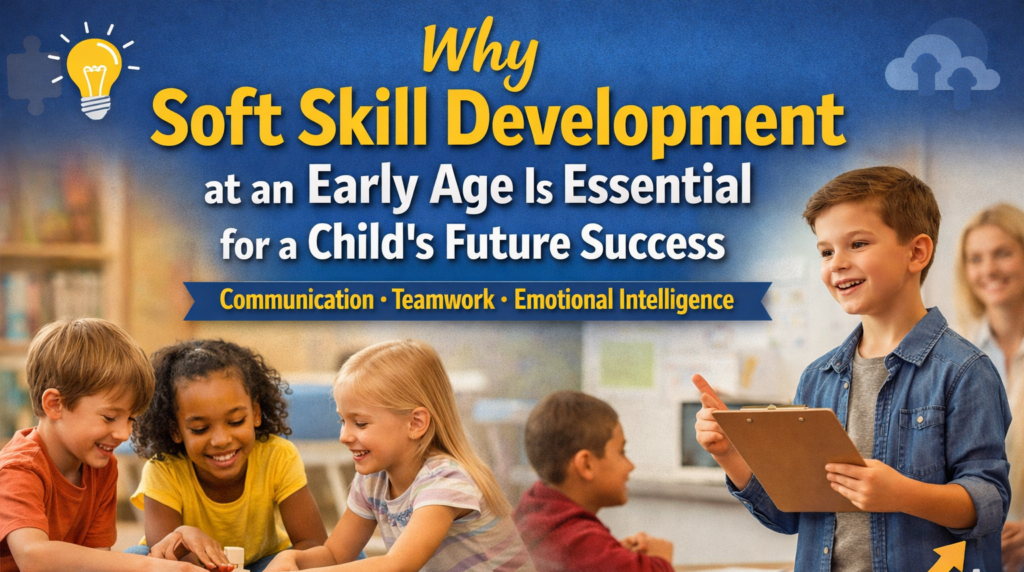
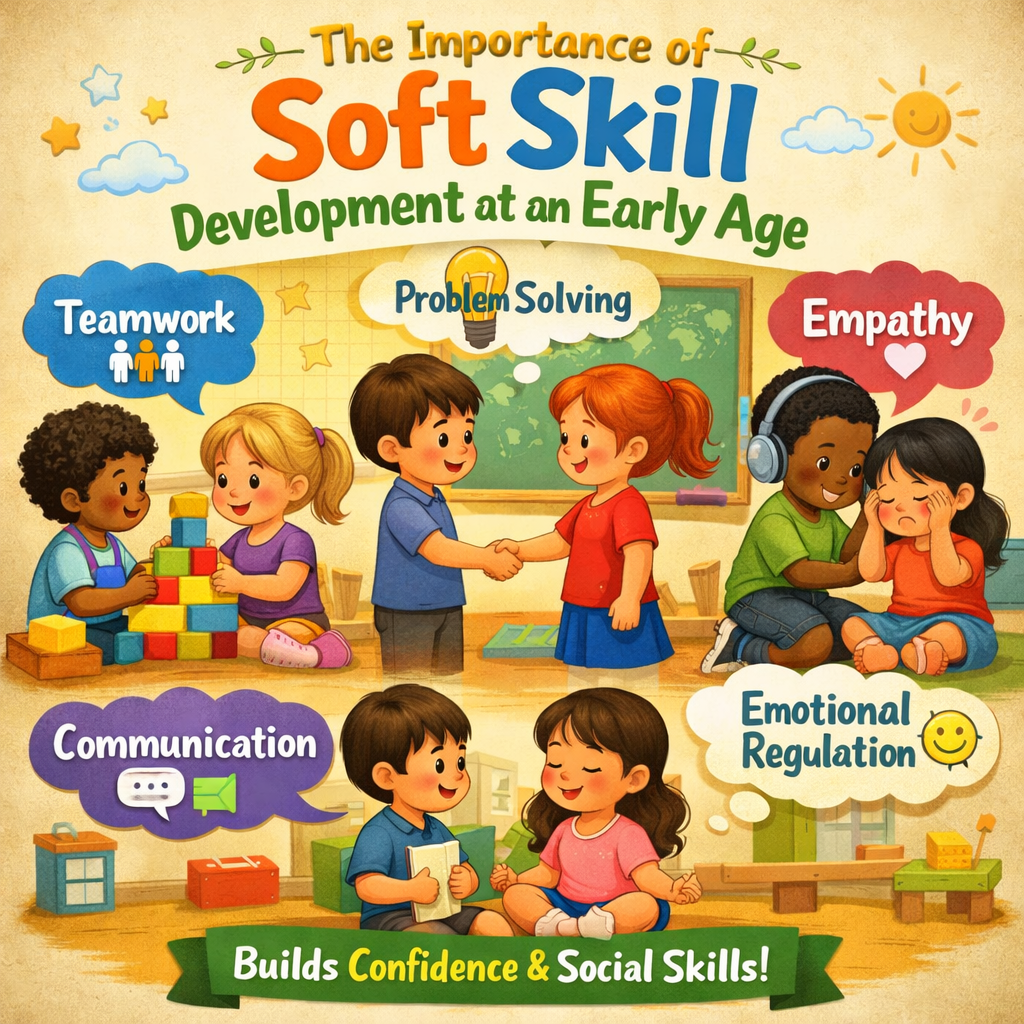
The Importance of Soft Skill Development at an Early Age
In today’s fast-changing world, academic excellence alone is not enough. Children may score high marks, but without the ability to communicate, collaborate, adapt, and manage emotions, long-term success becomes difficult. This is where soft skills play a crucial role.
Developing soft skills at an early age builds a strong foundation for personal growth, career success, and healthy relationships. Let’s explore why early soft skill development matters more than ever.
What Are Soft Skills?
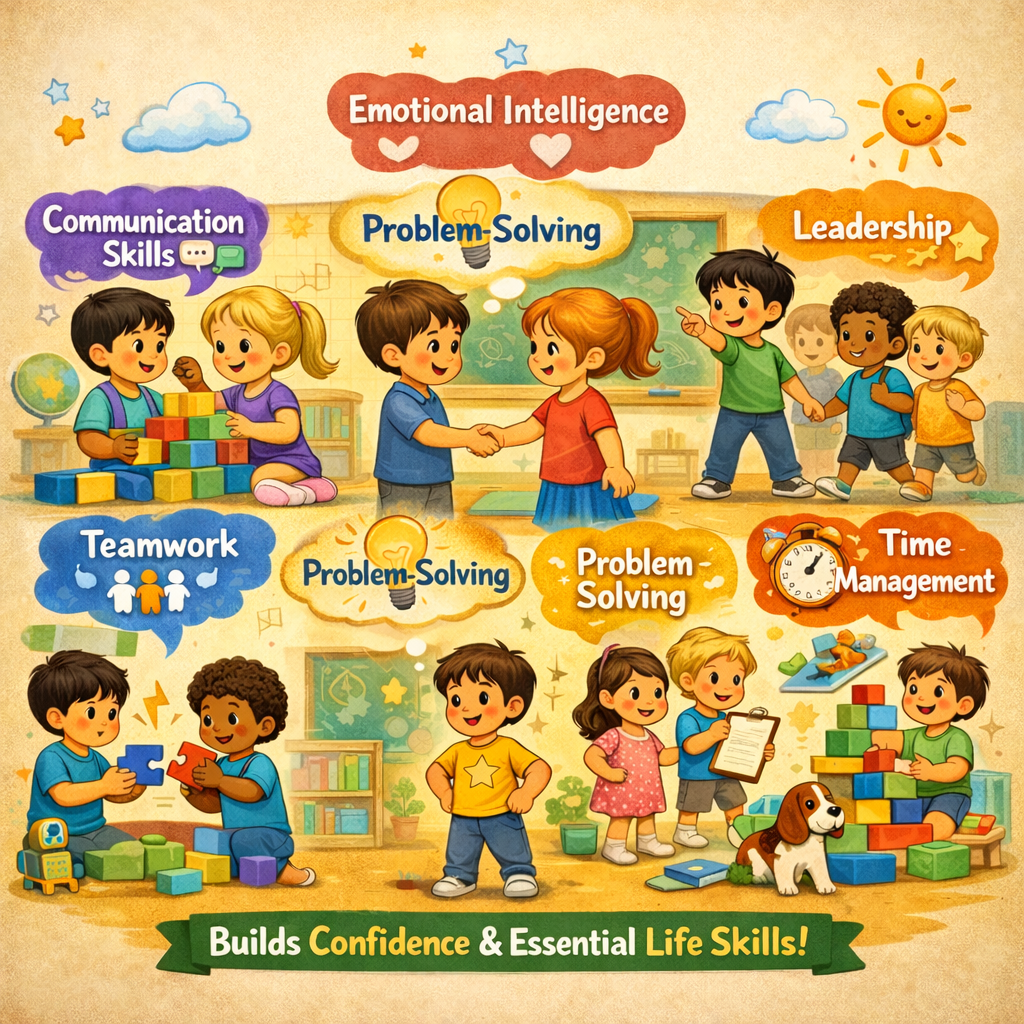
Soft skills are personal, social, and emotional abilities that help individuals interact effectively with others. Unlike technical or subject-based knowledge, soft skills shape behavior, attitude, and personality.
Key soft skills include:
- Communication skills
- Emotional intelligence
- Teamwork
- Problem-solving
- Leadership
- Adaptability
- Time management
- Conflict resolution
- Self-confidence
These skills are not taught through textbooks alone—they are learned through experiences, guidance, and practice.
Why Early Age Is the Right Time
Childhood is a formative stage where habits, thinking patterns, and behavior styles are developed. According to developmental psychology research led by Jean Piaget, early years significantly influence cognitive and social development. Similarly, psychologist Lev Vygotsky emphasized the importance of social interaction in learning.
When children are exposed to structured soft skill development early:
- They learn faster.
- They adapt better.
- They develop stronger emotional control.
- They build positive social behaviors.
Early learning becomes a lifelong advantage.
1. Builds Strong Communication Skills
Children who are encouraged to express their thoughts clearly grow into confident speakers and listeners. Early communication training helps them:
- Participate actively in class
- Present ideas confidently
- Build healthy friendships
- Avoid misunderstandings
Strong communication skills later translate into leadership ability and professional confidence.
2. Develops Emotional Intelligence
Emotional intelligence is the ability to understand and manage one’s emotions while respecting others’ feelings. As popularized by Daniel Goleman, emotional intelligence is often a stronger predictor of success than IQ.
When children learn emotional awareness early:
- They manage anger and frustration better.
- They show empathy toward others.
- They build healthier relationships.
- They handle stress effectively.
Emotionally intelligent children grow into balanced adults.
3. Encourages Teamwork and Collaboration
Modern education and workplaces demand collaboration. Children involved in group activities, sports, and project-based learning naturally develop teamwork skills.
Early teamwork exposure teaches them:
- Respect for diverse opinions
- Sharing responsibility
- Supporting peers
- Constructive disagreement
These experiences prepare them for future workplace environments.
4. Strengthens Problem-Solving and Critical Thinking
When children are encouraged to think independently and solve small problems on their own, they develop confidence and resilience.
Soft skill programs help children:
- Analyze situations logically
- Make decisions responsibly
- Think creatively
- Learn from mistakes
This builds a growth mindset and reduces fear of failure.
5. Builds Self-Confidence and Leadership
Confidence developed in childhood stays for life. Children who are given opportunities to speak, lead small tasks, or make choices become self-assured individuals.
Leadership skills developed early include:
- Decision-making
- Accountability
- Initiative-taking
- Influence through positive behaviour
These qualities are essential in higher education and professional life.
6. Improves Academic Performance
Soft skills and academics are deeply connected. A child who manages time well, communicates effectively, and controls emotions performs better academically.
Research in education psychology consistently shows that social-emotional learning programs improve:
- Classroom behavior
- Attendance
- Academic achievement
When students feel confident and emotionally stable, learning becomes easier and more effective.
7. Prepares Children for Future Careers
The future job market values human skills more than ever. While technology and artificial intelligence handle routine tasks, creativity, empathy, communication, and adaptability remain uniquely human strengths.
Organizations worldwide increasingly emphasize soft skills in hiring decisions. Early development ensures children grow into professionals who are not only knowledgeable but also adaptable and people-oriented.
Role of Parents and Teachers
Soft skills cannot be developed through lectures alone. They must be nurtured through:
- Encouraging open conversations
- Giving responsibilities at home and school
- Allowing children to make age-appropriate decisions
- Teaching respect and empathy
- Providing constructive feedback
- Modeling positive behavior
Children learn more from observation than instruction.
Practical Ways to Develop Soft Skills in Children
Here are simple strategies parents and educators can use:
- Encourage storytelling and public speaking
- Involve children in group activities and sports
- Assign small leadership roles
- Teach gratitude and empathy practices
- Allow problem-solving instead of giving instant solutions
- Provide exposure to debates, discussions, and creative tasks Consistency is key.
Long-Term Impact of Early Soft Skill Development
Children who develop soft skills early tend to:
- Build stronger relationships
- Perform better academically
- Handle career challenges effectively
- Adapt to change confidently
- Lead with empathy and responsibility
In contrast, lack of soft skills often leads to communication gaps, low confidence, poor teamwork, and difficulty managing stress in adulthood.
Conclusion
Soft skill development at an early age is not optional—it is essential. While academic knowledge builds intellectual capacity, soft skills shape character, confidence, and capability.
In a world driven by innovation, collaboration, and constant change, children need more than textbooks. They need emotional strength, communication ability, adaptability, and leadership qualities.
Investing in soft skills early is investing in a child’s lifelong success.
–Philomena Dsouza
About us
“Unlock your dream career with Draw My Career! Our AI-powered platform, personalized report, combined with expert counseling and lifelong support, helps you discover your passion, stay focused on your goals, and achieve success. We proudly claim to have positively impacted over 3,000 students in and around Mangalore, receiving overwhelmingly positive feedback. For expert career guidance,Take the first step towards a brighter future and let us guide you to write your own success story.”
Visit: www.drawmycareer.com