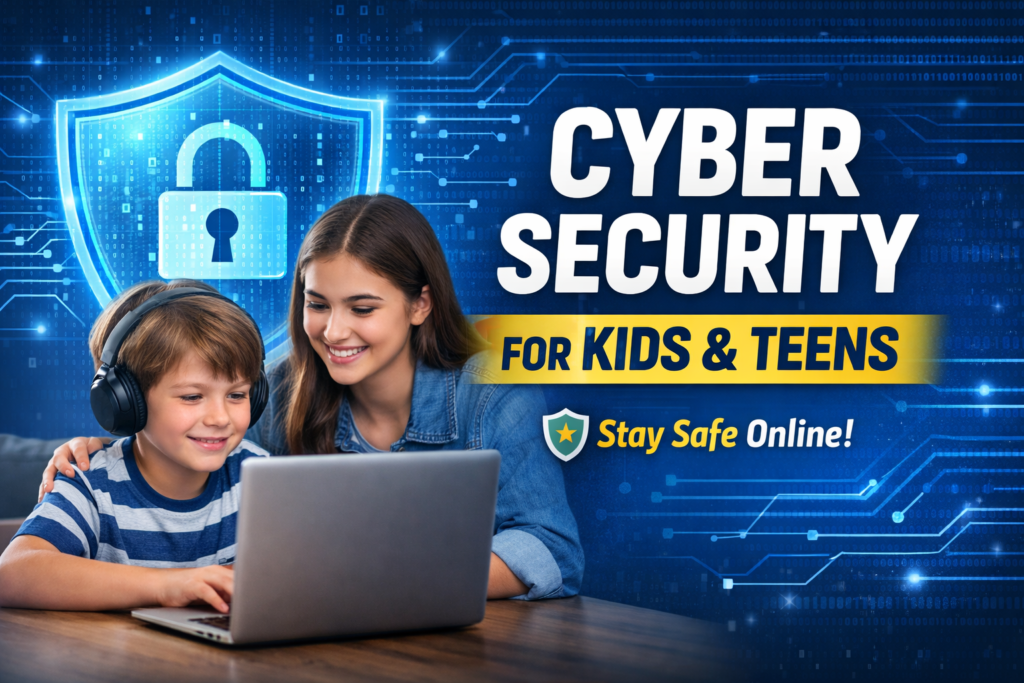
Kids and Teens need to recognise the fundamentals of cybersecurity in the modern-day world. Through understanding and execution of the basics of cybersecurity, kids and young adults may additionally cultivate more secure online behaviours, guard their information, and responsibly traverse the virtual landscape. Guidance, monitoring, and assets are crucial for parents, instructors, and guardians to help kids and teenagers be safe online and set up exact cybersecurity practices from a younger age.
What is Cyber Security?
Cybersecurity refers to the protection of computers, networks, and data from online threats, including cyberattacks and unauthorised access. By understanding cybersecurity basics, people can avoid malware and phishing, practice safe browsing, and create strong passwords to stay secure online.
The significance of cyber security for children and teenagers
- Encouraging Self-Protection:
- By mastering cybersecurity, kids and teens can take preventive steps to stay safe online, including creating strong passwords, updating software regularly, and using safe browsing practices.
- Preserving Privacy on Social Media:
- Children and young adults can prevent their digital identities and private information from being misused or exploited by way of gaining knowledge of the value of privacy settings and exercising manage over the records they submit on social media systems.
- Encouraging Responsible Digital Citizenship:
- Cybersecurity education encourages children and teenagers to use digital technologies in a responsible manner, respecting the rights and privacy of others.
- Protection against Online Predators:
- Teaching children and teenagers about cybersecurity issues enables them to identify and steer clear of potentially hazardous online contacts with strangers who might pass for friends or classmates.
- Safeguarding Personal Information:
- Young human beings can prevent identity robbery and the exploitation of their personal information by learning cyber protection concepts.
- Cyberbullying:
- Cybersecurity schooling helps prevent cyberbullying by giving kids and teens the tools they need to realize and take care of instances of cyberbullying. This enables the creation of a safer online area for social interaction.
- Developing Critical Thinking Skills:
- Teaching children and teenagers about cyber security helps them to become more adept at applying critical thinking techniques to assess online data and distinguish between trustworthy sources and potentially dangerous or false material.
- Improving Digital Literacy:
- Knowing the fundamentals of cyber security facilitates kids and teens turn out to be extra digitally literate, giving them the capability to securely and responsibly explore the net.
- Contributing to a Safer Digital Society:
- We can produce a generation of informed people who actively work to create a more secure and steadier digital society for themselves and future generations by teaching kids and teens about cyber safety.
Risks and Threats in the Digital World
- Cyberstalking: It is the practice of continuously observing, harassing, or monitoring someone online or through electronic communication.
- Data breaches: Unauthorized access to and publication of private or sensitive material kept on databases or computer systems, which frequently has a negative impact on finances, reputations, or legal ramifications.
- Cyberbullying: It is the term for the use of electronic communication to harass, threaten, or bully someone. It regularly results in emotional and psychological discomfort.
- Identity theft: It is the illegal use of someone’s personal information, such as credit card or bank details, for fraud.
- Malware: It refers to malicious software—such as viruses, worms, Trojan horses, and ransomware—that interferes with, harms, or gains unauthorized access to computer systems or networks.
- Misinformation and fake news: The purposeful spread of inaccurate or misleading content online has the strength to sway public opinion, erode institutional credibility, and exacerbate social division.
- Privacy violations: It occur when personal data is collected, used, or shared without authorization. This violates human’s right to privacy and puts them at threat of being watched, exploited, or discriminated towards.
Fundamental Concepts That Kids and Teens Should be Aware Of
1. Online Safety
Children and teens should avoid sharing personal details online, use privacy settings to limit visibility, and be careful when interacting with strangers on social media.
2. Passwords
For on-line accounts, create strong passwords with a combination of letters, numbers, and symbols. To lessen the possibility of unauthorised access, it is imperative not use the same password for different accounts. onlineKids and teens should protect their passwords and never share them with anyone, even friends.
3. Device Security
Updating software program and security patches on devices is a great way to preserve them stable from vulnerabilities. An extra line of protection against viruses and malware can be brought by using installing dependable antivirus software program. Device access is protected by utilizing security technologies like encryption and biometric authentication.
4. Phishing Awareness
Kids and teens should avoid clicking on unknown emails, messages, or links, as they may spread malware or steal personal information. They should avoid opening attachments or accessing links from unknown or unsolicited sources.
5. Safe Browsing Habits
Teens and kids should stay on trustworthy websites and avoid from installing software from unidentified sources or clicking on pop-up advertisements. Unsuitable content can be filtered out by using parental controls and safe search settings. Moreover, care should be used when downloading games, apps, or other content, and official app stores should be used whenever feasible.
6. Cyberbulling Awareness
Kids and teens should treat others with respect online and avoid cyberbullying. They should speak openly about their online experiences and report bullying to trusted adults or platforms.
7. Social Media Safety
Since online content is permanent, kids and teens should think before posting, avoid sharing personal details like location, and report or block anyone involved in inappropriate behaviour or cyberbullying.
Conclusion
Given the seamless integration of technology into almost every place of our lives within the current virtual age, it’s far critical that human beings of all ages have a primary grasp of cyber security. Also, we are able to permit the next generation to turn out to be responsible digital residents who use technology in a secure and morally responsible manner with the aid of promoting a tradition of cybersecurity from a young age. By working collectively, we will make the internet a greater steady and safe location for children and teenagers to develop, study, and join.
–Carol Marina Dsouza
About us
“Unlock your dream career with Draw My Career! Our AI-powered platform, personalized report, combined with expert counseling and lifelong support, helps you discover your passion, stay focused on your goals, and achieve success. We proudly claim to have positively impacted over 3,000 students in and around Mangalore, receiving overwhelmingly positive feedback. For expert career guidance,Take the first step towards a brighter future and let us guide you to write your own success story.”
Visit: www.drawmycareer.com